Safety First: When to Consider Professional Tree Removal Services
Removing a tree is a significant decision for any homeowner. Safety should always come first, especially when trees pose potential hazards. Weakened or infected trees can put both property and lives at risk. Recognizing the signs that indicate a tree's removal is necessary is essential. Homeowners should recognize the hazards at hand and the value of seeking expert help. The next steps in this process can make all the difference in ensuring a safe environment.
Recognizing When Your Tree Poses a Danger
Meteorological conditions also serve a vital function; powerful gusts or intense storms can aggravate an already weakened tree. Periodic inspections by a qualified arborist can help recognize these risks before they intensify. Residents should stay watchful, especially in the aftermath of harsh weather conditions, and take immediate action if they detect worrisome indicators. Ultimately, early recognition and intervention can prevent accidents and protect both property and lives.
The Dangers of Neglecting Tree Health
Overlooking tree health can create serious hazards for homeowners and their properties. Unattended trees may develop structural weaknesses, increasing the likelihood of branches breaking or entire trees falling, especially during storms. Such incidents pose threats not only to the home and surrounding structures but also to people in the vicinity. Moreover, weakened trees can invite pests and illnesses, which may migrate to healthy plants, threatening the surrounding landscape. This likelihood of widespread damage introduces greater financial pressure, as the costs associated with treatment or removal can grow substantially. Additionally, unattractive trees can reduce property value, affecting desirability when the time comes to sell. Homeowners may find themselves facing not only aesthetic issues but also hidden liabilities. Consequently, routine maintenance and dedication to tree health are critical in minimizing these risks and safeguarding the safety and aesthetics of the property.
Spotting Tree Diseases That Demand Expert Care
How can homeowners effectively recognize tree diseases that necessitate professional intervention? Identifying symptoms early is vital for maintaining tree health and safety. Property owners should watch for indicators like discolored foliage, abnormal growths, or irregularities in the bark. Signs such as wilting, slowed growth, or unexpected leaf shedding can point to a tree in distress. The presence of fungal formations, such as mushrooms near the base, can indicate underlying root issues, while cankers and seeping sap may be signs of infection.
Furthermore, pest problems, indicated by leaf damage or insect activity, can weaken trees and make them susceptible to disease. Trees presenting these conditions often necessitate professional examination, as untreated issues can lead to structural instability. Working with certified arborists ensures precise assessments and effective treatment strategies, protecting both the trees and the surrounding environment. Detecting these symptoms early empowers homeowners to adopt preventive steps, promoting long-term health and safety.
How Tree Proximity to Structures Affects Safety
Tree health is affected not just by diseases but also significantly by how close trees are to nearby structures. Trees planted too close to buildings, fences, or sidewalks can pose significant safety risks. The roots of such trees can undermine foundations and result in structural damage, while their branches can obstruct roofs, gutters, or power lines during severe weather. Additionally, trees that overhang properties can create hazards by potentially falling during high winds or severe weather.
In urban environments, limited space impacts tree development, often resulting in weaker branches and undesirable structural traits. This proximity can also promote competition for nutrients and water, thereby reducing the vitality of the trees. Periodic inspections are critical to assess the dangers linked to trees situated near structures, taking into account their species, size, and overall condition. Ensuring adequate distance between trees and structures can mitigate safety concerns and promote healthier growth.
Why Hiring Tree Removal Pros Is Worth Considering
Utilizing professional tree removal services provides notable benefits due to their knowledge and experience in the field. These experts are fully prepared to handle complex tasks while minimizing safety risks and liability concerns. Choosing their services ensures both effective tree management and peace of mind for homeowners.
Knowledge And Experience
When confronted with the challenging task of having a tree removed, people often underestimate the complexities involved. Expert tree removal companies bring a wealth of skill and expertise that is essential for effective and safe removal. Skilled arborists possess in-depth knowledge of tree biology, developmental patterns, and the specific techniques required for different types of trees. Their expertise allows them to analyze the situation correctly, recognizing possible dangers and determining the best approach for removal. Moreover, specialists are furnished with advanced tools and machinery that boost precision and effectiveness, decreasing the likelihood of damage to adjacent property. By enlisting professionals, homeowners can ensure the work is done properly, ultimately saving time and reducing stress.
Safety And Legal Liability Risks
Tree removal can create significant safety hazards and liability concerns that are commonly disregarded by those attempting the task themselves. Inexperienced individuals may fail to appreciate the complexities involved, resulting in incidents that can result in personal injury or damage to property. Dropping limbs can cause injury to people in the vicinity, while incorrect use of tools may result in personal harm. Additionally, if damage occurs to neighboring properties, the homeowner may be legally accountable for the damages. Qualified tree care specialists are armed with proper training, protective equipment, and liability coverage to reduce these dangers. By hiring experts, homeowners are able to secure a more secure removal but also protect themselves from potential legal repercussions, making qualified professional help a prudent choice for addressing tree care issues.
What Happens During Professional Tree Removal
Throughout the professional tree removal process, the procedure begins with an initial inspection to evaluate the tree's condition and surrounding environment. Specialized equipment and techniques are then employed to secure a safe and effective removal process. Lastly, post-removal tidying measures are carried out to return the area to its original state, leaving it tidy and free of debris.
Initial Assessment Process
Prior to any tree removal, a comprehensive initial evaluation is essential to guarantee safety and efficiency. At this stage, skilled specialists will assess the tree's size, condition, and positioning in relation to nearby structures and power lines. They will also identify likely risks, such as dead limbs or infection, that could hinder the tree removal procedure. Evaluating the nearby surroundings helps establish the most effective method and required safety measures. The team may also review the homeowner's concerns and objectives to establish consensus on the removal approach. This detailed evaluation lays the groundwork for a safe operation, minimizing risks and guaranteeing that the job meets established safety guidelines and local regulations. Adequate preparation is fundamental for a smooth tree removal experience.
Gear and Approaches Utilized
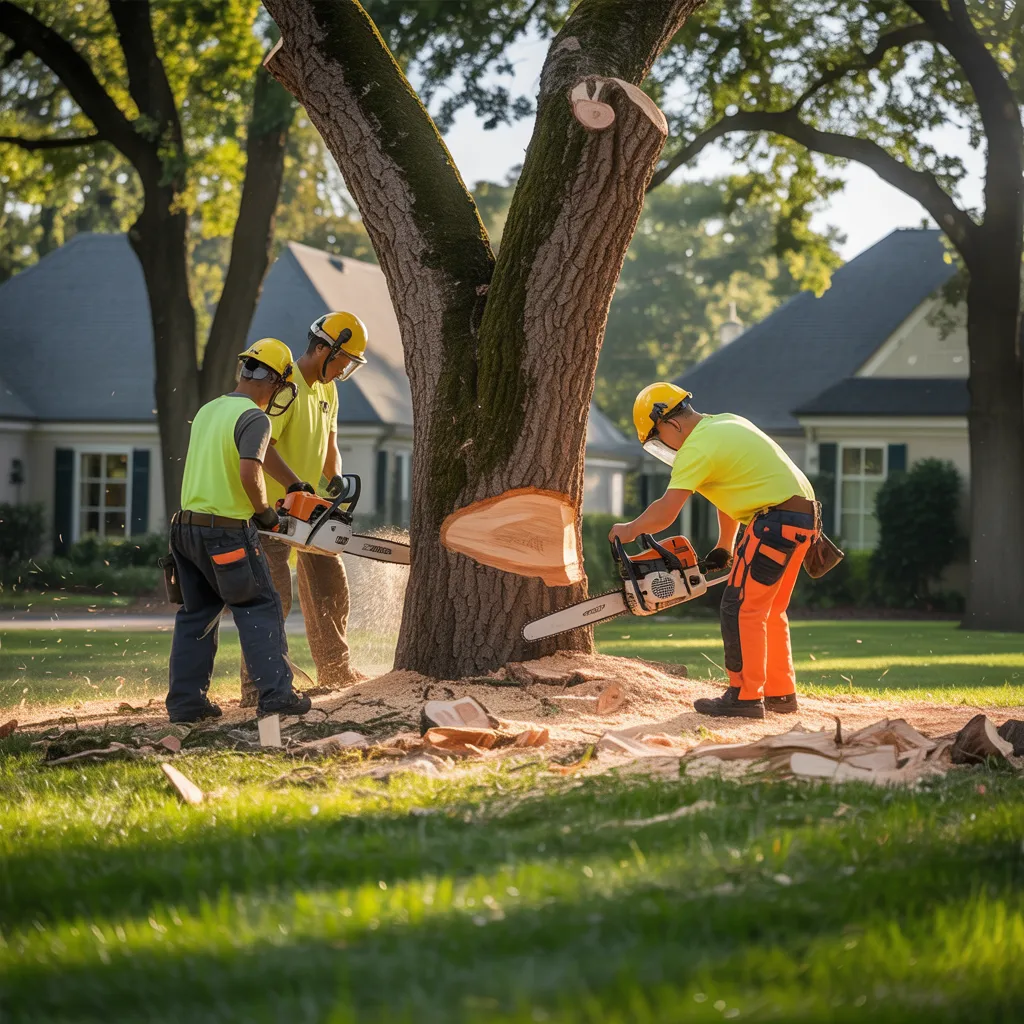
Since every tree removal project differs, experts generally depend on an array of specialized tools and methods to make certain the work is carried out safely and with precision. Chainsaws remain a fundamental piece of equipment, allowing for precise cutting of the trunk and branches. Arborists often employ ropes and harnesses to keep themselves safe and manage the lowering of heavier branches. In some cases, cranes or bucket trucks are utilized to access taller trees safely. Additionally, chippers are used to process branches into mulch, minimizing debris. Experts carefully evaluate the surrounding environment to determine the best approach, frequently using techniques such as directional felling to dictate the precise path of the falling tree. Such meticulous planning and strategic equipment selection work together to deliver a smooth and secure removal process.
Steps for Cleanup After Removal
After the tree has been safely removed, the cleanup process begins to restore the area. The skilled technicians will initially clear away large branches and sections of the trunk, typically reducing them to easily handled portions. Stump removal may then occur, where the leftover stump is reduced to below the surface, minimizing its visibility and preventing regrowth.
Next, any remaining debris, such as leaves and small branches, is collected and removed. The team may also address any damage to surrounding plants or grass, ensuring the landscape remains intact. As a final step, they will present replanting or landscaping options for the cleared area if the owner desires. From start to finish, safety is the top priority, with the site being left spotless and hazard-free for the property owner.
Commonly Asked Questions
How Much Will Professional Tree Removal Generally Cost You?
Professional tree removal typically analysis costs between $200 and $2,000, with costs influenced by factors like tree size, location, and accessibility. Additional services, like stump grinding and debris removal, may increase overall expenses for homeowners.
Can I Remove a Tree Myself Legally?
Yes, individuals can legally remove a tree themselves, provided they comply with local regulations and obtain necessary permits. However, it's essential to assess risks and potential liabilities associated with the task before proceeding.
What Permits Are Required for Tree Removal?
Typically, a permit for tree removal may be required depending on local regulations, tree species, and size. Homeowners should check with municipal authorities to verify compliance with any necessary permits before proceeding with removal.
How Much Time Does the Tree Removal Process Require?
Tree removal typically takes anywhere from a few hours to an entire day, depending on factors such as tree size, location, and complexity. Considerations including permit requirements and weather conditions can also influence the overall duration of the project.
Can Tree Removal Harm My Lawn or Landscaping?
Tree removal can potentially damage your lawn and landscape, especially because of heavy equipment usage and root disturbance. That said, skilled professionals frequently implement measures to limit any negative effects, making sure the surrounding area is rehabilitated as much as possible afterward.